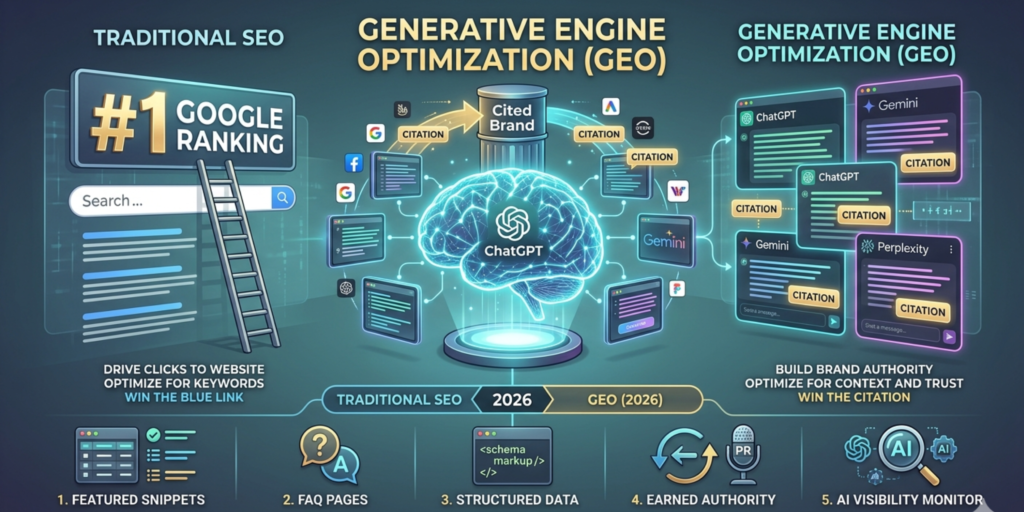
“How do I get my brand cited by ChatGPT?”
That’s the number one question we hear from business owners in 2026. For years, the goal was simple: rank #1 on Google. But today, millions of people are getting answers directly from AI engines like ChatGPT, Gemini, and Perplexity — without ever clicking a link.
So if they aren’t clicking, how do they find you? Welcome to Generative Engine Optimization (GEO).
What Is GEO?
Generative Engine Optimization (GEO) is the practice of optimizing your content so AI-powered search engines cite your brand as a trusted source when generating answers. GEO doesn’t replace SEO; it evolves it.
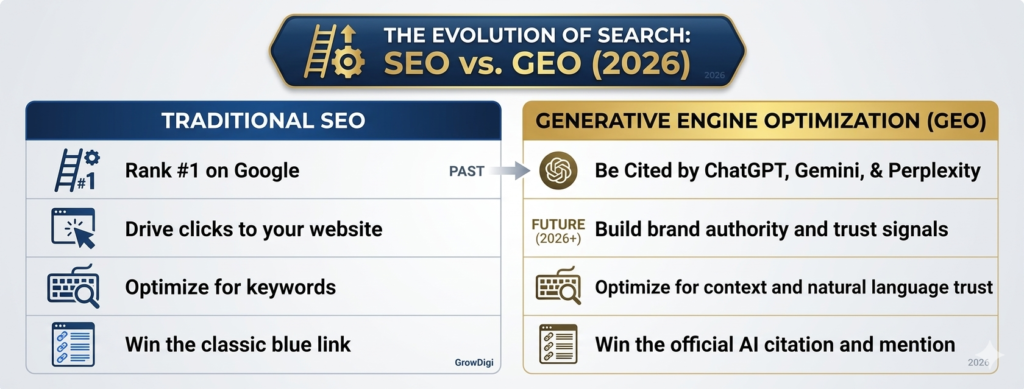
GEO vs. SEO — The Key Differences
The brands winning in 2026 don’t just chase rankings; they build authority that AI models trust.
Goal: Traditional SEO aims for search page rankings, while GEO focuses on being cited in AI-generated answers.
Traffic Source: SEO relies on clicks; GEO relies on brand mentions and trust signals.
Optimization Target: SEO targets keywords and backlinks, whereas GEO prioritizes structured data, FAQs, and authority.
Primary Platforms: SEO focuses on Google and Bing; GEO targets ChatGPT, Gemini, Perplexity, and AI Overviews.
Why GEO Matters Right Now
The numbers don’t lie:
67% of marketers say consumers now discover brands through AI and social media — not traditional search engines.
Google’s AI Overviews now appear at the top of billions of searches, pulling answers directly from authoritative sources.
1 billion+ users actively use ChatGPT, Gemini, and other LLMs for answers daily.
If someone asks an AI for the “best digital marketing agency in Canada” and it cites GrowDigi, you win through instant credibility and trust—even without a direct click.
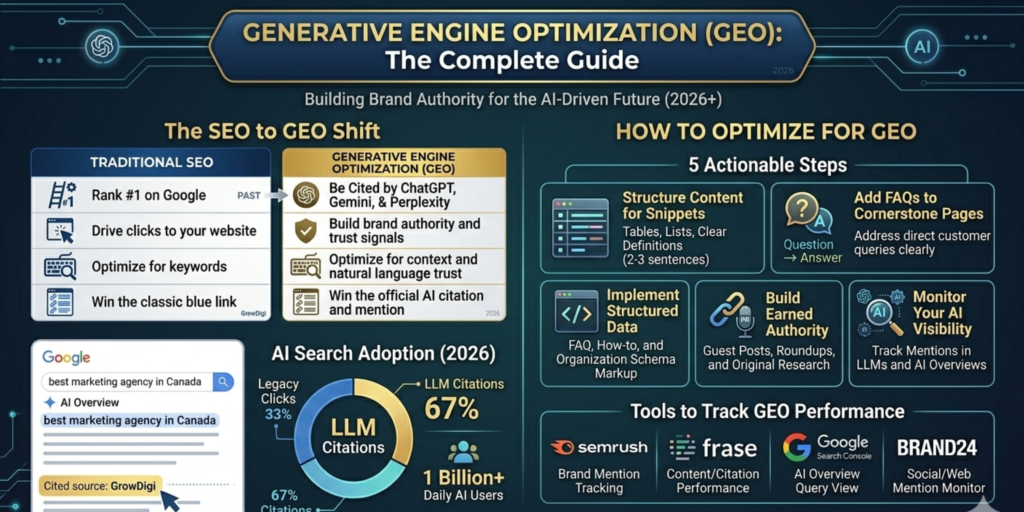
How to Optimize for GEO (5 Actionable Steps)
1. Structure Content for Featured Snippets
AI engines love clear, scannable content. Use tables, bullet points, and concise 2-3 sentence definitions.
2. Add FAQs to Every Cornerstone Page
FAQs answer specific customer questions, which is exactly what AI models look for. Ensure you use a clear Question → Answer format.
3. Implement Structured Data (Schema Markup)
Schema helps AI understand context. Use:
FAQ schema for Q&A blocks.
How-to schema for process posts.
Organization schema for brand info.
4. Build Earned Authority (Backlinks + PR)
AI models trust sources that other trusted sources cite. Focus on guest posting, original research, and getting mentioned in industry roundups.
5. Monitor Your AI Visibility
Track your performance using tools like Semrush or Frase to monitor brand mentions in AI Overviews and LLM responses.
Conclusion
SEO isn’t dead; it’s evolving. The brands that win in 2026 will stop obsessing over position #1 and start building authority that AI models trust.
Ready to get your brand cited by ChatGPT, Gemini, and Perplexity? 👉 Contact GrowDigi for a free GEO audit